Pages

Tuesday, December 16, 2014

Holiday Sharing in an Interfaith Family

Ah, the holidays. It's a time of year when you can't help, but hear 374 different versions of "Let it Snow." It's a time of year for gift giving and and the high stress of family gatherings. For a lot of people it is also a religious time.
But, what happens if there are more than one religion at home? 
In an article posted on everydaylife.com the writer pointed out that, "raising children in an interfaith household provides parents with a unique opportunity to celebrate both faiths and honor their children's religious heritage."
Still, there are some scruples about educating a child in multiple religions. At the top of the list, some say that two or more faiths can confuse a child, force them to pick one parent over the other or have incomplete knowledge of both religions.  
According to Susan Katz Miller in her post 7 Myths About Raising Interfaith Kids, she stated in respect to Christian and Jewish interfaith families, "Interfaith children raised in both religions often take on the role of interfaith interpreters, or bridge-builders. At a Bat Mitzvah, they can explain Jewish prayers and rituals to their Christian friends. At a Christian confirmation, they can explain prayers and rituals to their Jewish friends."
A 2009 study shows that one third of families in the U.S, or 35%, recognize themselves as interfaith. The study shows that Jews and Christians lay the foundation for interfaith couples and families. 
There are easy ways to share the December holidays when raising an interfaith child. Lighting the Chanukah candles in the glow of the Christmas tree can be a great opportunity to discuss the importance and equality of both faiths. When a family celebrates the holidays side by side they'd be surprised at how many customs overlap. At least when it comes to Judeo-Christian faith. 


If religion is subtracted from the holiday season, what's left? Togetherness, gift giving, food, family, happiness and cheer. Now, insert each religion back in one at a time. See that? The holiday season is about the miracle of G-d. But, it is also about togetherness, gift giving, food, family, happiness and cheer.
Although the details may be different, overall, the December holidays may have more in common than you think.

Monday, November 17, 2014

Kim Kardashian Breaking the Internet with Her Mom Body

Recently Paper Magazine and Kim Kardashian set up to "break the internet" with pictures of the new mother in all her naked glory. It's not clear if they succeeded or even what that means, but there is one thing to be said about Kim and her naked booty.
You go girl!
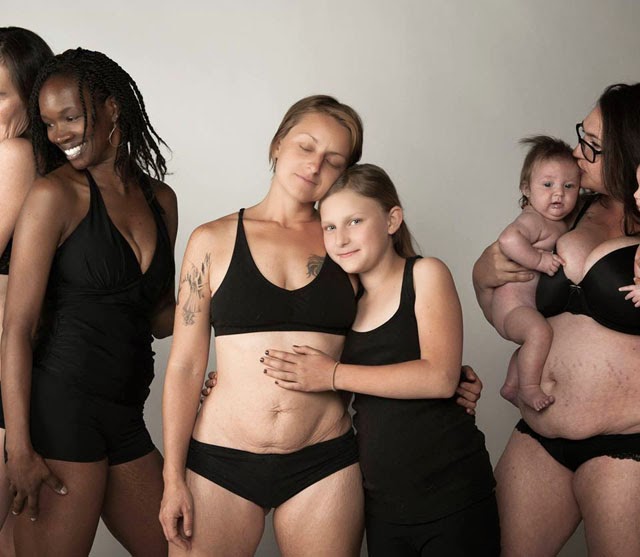
New mothers have countless struggles including body image issues. Some that go from a size 2 to a size 14 stay that way despite vigorous workouts and fad diets. Add postpartum depression and sleep deprivation and its a whole new ugly story.
Not surprisingly, Kim has gotten considerable backlash for her shoot with Paper. Most people saying that the nude photos were "trashy" and "tasteless."
One commenter stated, "You know, I've always thought Kim Kardashian was a gorgeous woman, but she truly shows how little class she has..you're a mother now Kim, if you can't have respect for yourself at least have it for your daughter."  
There is nothing disrespecting about the human body in all it's natural or enhanced states. This is especially true for mothers. To have the confidence to take nude pictures of your body after going through the brutal change of not only pregnancy, but child birth is nothing short of amazing and deserves respect.
According to biomedical, "Pregnancy and childbirth are associated with weight gain in women, and retention of weight gained during pregnancy can lead to obesity in later life. Diet and physical activity are factors that can influence the loss of retained pregnancy weight after birth."
While it's true that, like most celebrities, Kim no doubt had an army of nannies, personal trainers and nutritionists to help her get back into shape after having little North, that does not take away from her accomplishments. She grew a person, brought her into the world and then got her body back.
You flaunt that mama body, Kim!
Just because a woman becomes a mother that does not mean that everything that made up who she was before disappears. The woman who was a daughter, sister, friend, artist, writer, reader or whatever else that makes up a person does not become invalid because she is now a mother.
It adds to her.
She is now a mother, along with all those other things that make up the human condition. The idea that the identity that existed before motherhood disappearing after the baby comes is reinforced by questions like, "How does it feel to be a mom?"
That is a loaded question. It suggests that new moms feel different than they did before the baby was born. In some aspects she does. Sleep deprivation, fear, loneliness, anxiety are at the top of the list, but essentially, they are the same person they were before giving birth, only now they have a small person to take care of.
Just because Kim is a mother doesn't mean that who she was before doesn't exist anymore. She is still who she was before her child was born, take it or leave it.
If anything, motherhood has seemed to improve her a little. This photo shoot shows that mothers don't have to be hidden behind the nun's habit. The naked body is nothing to be ashamed of. After all, it's only natural.

Sunday, November 16, 2014

The Qualms of Breastfeeding

Breastfeeding is intimate and private. It gives a chance for mother and child to bond. It offers security and comfort to the child while providing essential nutrients that the baby needs to grow up big and strong.
The question is, if breastfeeding is so wonderful, why is there so much negativity toward it?
According to the American Academy of Pediatrics, doctors suggest that woman breastfeed for the first six months of their baby's life. Although, most pediatricians advise that woman breastfeed as long as two years of life.
It is the personal choice of the parents and child who is being breastfed. If a mother chooses to breastfeed into toddlerhood it is her personal choice. That being said, there is a lot of disapproval from society when it comes to toddlers and breastfeeding.
Recently, a breastfeeding mother was kicked off a Delta airlines flight for not necessarily breastfeeding her child, but for not moving her sleeping 2.5 year old from her breast to her car seat fast enough for the flight attendant.
For anyone who has traveled with a toddler, they know that if that child is sleeping, you do your best to keep them that way when on an airplane or in a car. The mother had explained to the flight attendant that she was moving as fast as she could. When that wasn't enough, the flight attendant told the mother to gather her things and escorted her off the plane, leaving her stranded.
When the mother's partner called the airline to complain, the representative stated, "Why is a 2.5 year old breastfeeding, anyway?"
The answer, of course, is obvious:
That's none of your business.
Sadly, this is not an isolated incident. Not only for Delta, (there have been other times where flight attendants kicked breastfeeding moms off flight for indecently) but in society as a whole. There is general negativity when it comes to breastfeeding and moms. This is especially the case when breastfeeding in public.
People are apposed to mothers breastfeeding in public because they say that it violates the public nudity laws. This is 2014. Women walk around showing more skin than a breastfeeding mother and yet they aren't asked to cover up. Most mothers do cover while they are breastfeeding, even though the law does not require them to.
Nation wide, mothers have the right to breastfeed their child in public, i.e. parks, restaurants, schools, bus stops and where ever else mother feel the need without covering up.
This goes for toddlers, too. Most kids will call the shots. Even with their growing independence, some toddlers still need that closeness past the age of one. Not to mention the health benefits of "extended breastfeeding" such as protection from illness for mom and baby, brain boost, and comfort.
So, as long as it is working for both mother and child, go ahead and breastfeed past the age of one if you want to.
And for all the Negative Nancys that feel that they have the right to comment, that's not really your business, now is it?


Wednesday, November 5, 2014

Finding the Balance

You hear it all the time. After the baby comes the new parents' lives completely shift from being all about each other to all about the new addition to the family. Date nights and sleeping in disappears with the 6 o'clock wake up call from the crib and crashing after the baby is asleep.
Luxuries like getting a manicure or hair styled?
Forget it!
That being said, having a baby does not mean that the identities and dynamics that the new parents had totally disappear. It's important for not only parenthood, but for partnership to maintain a sense of self.
Although babies can be very demanding and time consuming, it's important to remember that marriage is not only a partnership in aspects to parenting. There is a balance between all that it means to be a parent and where a couple was before the baby came.
In a blog that appeared on babycenter.com the blogger stated, " Just a few months ago I caught myself forcefully begging Ryan [my husband] to pay attention to me for once! Say ‘hi’ to me first once. When did I become a second class citizen in this house? Weeks of no makeup and a wardrobe filled with sweats was beginning to take a toll on my self esteem as a woman."
It's hard. People have lives to live and when children come into the equation it's hard to let in anything else. Still, for the health of both the individuals and the household on a whole, take some time to do adult things. Even if it has to be after the kids are already asleep. Ask about each other's days. Talk about something else besides what the kids did that day.
Not everything needs to fall on the dad either. The fall out that a lot of married couples feel after the baby comes is no one's fault. It happens. The demands of the baby are louder than the demands of each other's. Find time for each other.

Don't disappear. Here are some things to try:
Try saying hello to your partner first and your baby(s) second. It sounds hard to "put baby second" but you have two loved ones that have been apart from you all day and are anxious for your attention.
Compliment and encourage your partner. So what if she's still in the same yoga pants you left her in when you left the house 12 hours ago? It may have been that kind of day.
Be sensitive to your partner's mood. Although she may have been home in her yoga pants all day, she still had a long and tiring day.
Go on a date! Once a week, or once a month, it doesn't matter how frequent. Take some adult time and actively try to not only talk about your children.
Have sex. Don't forget about that! No one what's to "pencil in" sex, but if that what it takes, do it. Both you and your partner will be happier for it.

What it boils down to is making time for each other. Family life can be all consuming, but you can't neglect your individual needs. The little things will keep piling until you feel unappreciated and neglected. Open communication and compassion can go a really long way.


Friday, October 17, 2014

8 Ways to Protect Your Family Against Flu and Other Dangerous Illness

The world is sick. Super viruses are raging all over the world, adding new danger to the already feared flu season. Households with small children are especially likely to visit the emergency room at some point during this year's flu season.
According to the Center for Disease Control (CDC), "Flu activity most commonly peaks in the U.S. between December and February. However, seasonal flu activity can begin as early as October and continue to occur as late as May."

Here are some quick, commonsense things that can be done to reduce the likelihood of getting sick.
1. Don't share any food or drink with someone who appears to be sick.
2. Wash your hands with soap and water for at least 20 seconds to kill germs.
3. Stay home if you are sick.
4. Eat a lot of "super greens" such as spinach and kale.
5. Disinfect commonly touched surfaces such as door nobs and other handles.
6. Try not to worry. Worry is scientifically proven to lower the immune system which will enable more sickness to effect the body.
7. Get a flu shot
8. Avoid touching the eyes, nose and mouth.

Growing concern of the Ebola virus is rising in the US since the flu and Ebola have similar symptoms. USA Today provides some piece of mind for US residents who fear that as the flu season sets in, they won't be able to tell the difference between Ebola and the regular flu.
Here's what you need to know:
Week one of Flu - regular cold like systems along with fever and fatigue (just like Ebola)
Week two - still feeling the same systems as week one, while Ebola patients would likely be vomiting blood.
Week three - starting to feel better, while Ebola patients are likely to have internal bleeding, seizers and possible death. (the US Ebola survival rate is about 50/50)

However scary the Ebola virus may seem, it is extremely hard to catch it. Direct contact with bodily fluids such as blood or vomit is required. The Ebola virus is NOT air borne. Still, a little diligence does not hurt as flu season 2014-15 rears it's ugly head.

Another virus to look out for, and is far more likely to be contracted, is the super virus D68. The CDC states,  "In the United States, people are more likely to get infected with enteroviruses in the summer and fall. CDC expects, as with other enteroviruses, that EV-D68 infections will likely begin to decline by late fall."

Still, with Ebola like symptoms as well, it's good to know the signs. Children with a history of wheezing or other respiratory distress while sick are particularly vulnerable. King5 News in Washington states that 22 states have confirmed cases on D68. This number has jumped from Tuesday when it was reported that only 11 states had been affected by enterovirus D68.

The key is to not be paranoid, but to use care as the 2014-15 flu season kicks in. Stay calm, and use commonsense tactics to keep sickness at bay, may it be a common cold or flu or the dreaded Ebola virus. At the end of it all, no one likes to be sick.


Tuesday, September 9, 2014

Ode to Daddy

When a woman has a baby she is overflowed with emotions and expectations. The harshest of these expectations comes from herself. She instantly feels the need to immediately be an expert in everything that is her baby. This behavior seems to be essential in the early months of her newborn's life.
However, as her child grows more independent it may be hard to remember that she is not, and never was, alone. There was another person who made it their business to be an instant expert in everything that is her child. From bathing to changing diapers, to fevers to feedings, this person has been there as well.
Daddy.
It's true that a lot of the care for a new baby falls on the mother. This is especially the case with breastfeeding and/or stay-at-home moms. Every moment of every day and night is centered around the small person that has recently come into the world. As a result, it may be hard to remember that Daddy can take care of baby just as well as Mommy.
Feelings of attachment often originate in the womb. A woman goes through a miraculous change while pregnant. According to Tracy Rosecrans of heartline.com, "Pregnancy is [a] time of great physical and emotional change for women."
The 40 weeks of pregnancy is plenty of time to set a woman up to feel like it all rests on her shoulders since all the changes are happening to her body and hers alone.
Society puts a lot of pressure on mothers to fully support and raise their child without any help. There is a heavy expectation that is implied in the early days after birth - your maternal instincts will kick in and you will magically know how to raise a little person (even if you've never been around a small person before...it's that magical) or you're a bad mother.
With guidelines like these, it's hard to remember that there is another person there worrying and dotting over that small person.
Yep, you guessed it - Daddy.
Doctors Richard and Jan Hanson stated that the village it takes to raise a child seems more like a ghost town these days. In their column "Mother Nurture" they say, "The amount of mental and physical work that comes with children is staggering. It ranges from figuring out what color to paint the new baby's bedroom while you're pregnant to -- eighteen years later -- helping him pack for college." 
What's the remedy? Share the load.
This isn't always easy. One of the first things that is told to a new mother is "establish a routine for your child" but that doesn't always include the father. As time passes and the routine becomes sacred it's hard to have confidence in the ability of the father.
The issue of course is not in the ability of the father's child caring skills. It's in the ability of the mother to let go and share the day to day tasks with your partner.
Let go!
It's important for all parents to have a little "Me Time." Everyone gets burnt out. To share the load is to get a little time to yourself. Even if it's just ten or fifteen minutes a day. Use that time to unwind and regroup.
Start with delegating some of the tasks. Assign some of the daily routine to your partner like the bath, getting dressed, story time or a walk. It may be hard at first, but they have been with baby from the beginning as well. More often than not, perhaps even more so with working parents, it gives them a chance to bond with baby since they've been away all day.
So, Daddy - take control of some tasks. Although Mommy may seem a little wary at first, know that it has less to do with her doubting your ability to care for your child and more to do with her inability to release some of the responsibility and sharing the load.

Monday, September 1, 2014

Why "All About That Bass" Is Awesome

The song "All About That Bass" by the 20-year-old Meghan Trainor is heard from the radio to the dance class at the gym. The question is, "why is that?"
Because it's awesome!
Meghan gives voice to all the young girls who are distraught that they don't look like the girls in the magazines. With a strong, beautiful voice and a beat you can't help, but dance to Meghan states plain and clear:
"Cuz every inch of you is perfect, from the bottom to the top."
What tweens and teens don't realize is that the reason they don't look like the girls in the fashion magazines is because the models are fictional. If the girls saw what the models looked like before they were Photoshopped they might feel a little better about themselves.
The song states, "I see the magazines working' that Photoshop. We know that sh*t ain't real. C'mon know, make it stop!"
What's great about that lyric is that it calls out the fashion industry for fabricating beauty which keeps little girls buying their products to look "beautiful." But, what they don't know is that they will never achieve it, since their base of beauty is physically impossible.
Surprisingly, Meghen has received some backlash. One blogger writes for the Feministing stated that the newly declared woman's anthem "All About That Bass" is disappointing. In response to the first verse where Meghan talks about accepting her curvy body, this blogger states, "No need to worry about failing to meet the standard of beauty imposed by the fashion industry, she meets the one imposed by men. Phew, that’s a relief!"
Although both forcing yourself into what the fashion industry claims in beautiful and forcing yourself into the image of what a man might think is beautiful are bad, (no girl of any age should force themselves into any sort of image) To say that you are curvy and that's beautiful is ultimately what she's saying in the song.
The blogger for Feministing goes to say, "OK, but are women who don’t have boom boom disqualified from having beauty? Is beauty the same thing as boom boom?"
This verse states what Meghan Trainor is trying to say. You are perfect the way you are. She is not disqualifying anyone. She is working off the pretense that skinny girls are generally considered beautiful more than curvy ones. Meghan states it clear as day in the first line of the song:
"Yeah, it's pretty clear. I ain't no size 2."
According to USA Today, "Psychologists and eating-disorder experts are worried about the same thing. They say the fashion industry has gone too far in pushing a dangerously thin image that women, and even very young girls, may try to emulate."
The article goes on to say that there are increases in eating disorders in young girls who are trying to lose weight to look like the models depicted in the magazines. The scary thing is that it isn't all photoshop. The lanky, "willowy" look of today's model's has been declared unhealthy by other fashion industry leaders in places like Spain and India.
Girls have enough trouble as it is trying to feel comfortable in their own skin. If a song like "All About That Bass" helps them, then good! So what if the lyrics are little shallow in places? If anything, the song opens the doors for the conversations that we should be having with our young girls about what is beautiful and what is just plain fabricated.